NIGER STATE’S $114 MILLION LOAN: THE BURDEN OF UNFULFILLED PROMISES
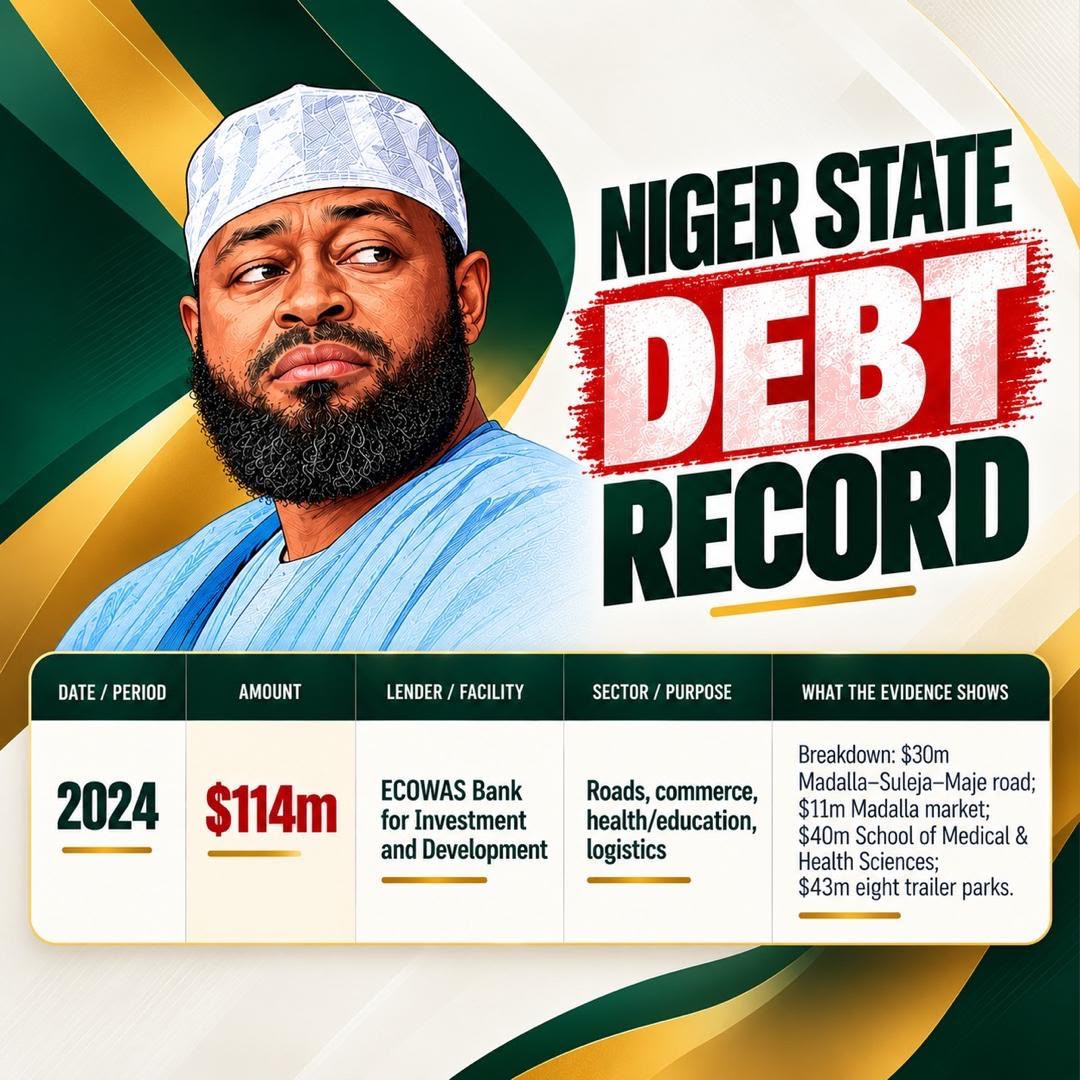
In 2024, Governor Mohammed Umaru Bago’s administration announced a $114 million financing arrangement with the ECOWAS Bank for Investment and Development (EBID) to fund four major projects: the Madalla–Suleja–Maje dual carriageway ($30 million), Madalla Green Economic Market ($11 million), conversion of the former Minna Secretariat into a School of Medical and Health Sciences ($40 million), and construction of eight international trailer parks ($43 million).
Two years later, the fundamental question remains: What tangible progress has been made, and what economic benefits have the people of Niger State received from these financial commitments?
Being a member of EBID does not mean Niger State is receiving free money. Loans come with repayment obligations, and foreign-denominated borrowing can expose public finances to exchange-rate fluctuations. Without timely project delivery and measurable economic returns, these obligations could place additional pressure on state resources, potentially reducing funding available for education, healthcare, security, infrastructure and other essential public services.
The greatest danger is not borrowing itself, but accumulating debt without delivering corresponding development. Niger State risks facing a future in which critical infrastructure remains inadequate while taxpayers continue bearing the financial consequences of projects that have failed to produce the promised benefits.
Such a situation could weaken the state’s financial capacity, limit investment in future development priorities and transfer today’s financial burdens to generations that had no role in making these decisions.
The Bago administration must therefore provide clear, verifiable information on the status of each project, the amounts actually disbursed, implementation milestones, repayment obligations and the benefits delivered to citizens.
Governance must be measured by results, not announcements. Development must be demonstrated through completed projects, not celebrated through loan agreements.
The real value of the $114 million financing commitment should be determined by what it delivers to Nigerlites. Without transparency, accountability and measurable progress, today’s ambitious promises is tomorrow’s debt burden and fiscal crisis on common people